Storage capacity analysis
Increasing data volumes and growing storage costs make capacity planning a central IT economic theme. The article presents a method for analyzing and projecting storage needs 3–5 years ahead and shows how this can be translated into a solid decision basis for budgeting, sourcing and infrastructure investments.
 Get access
The need for storage capacity is growing significantly in most organizations. The increase is driven by everything from increased use of images, video, sensor data and AI to stricter requirements for backup, security and compliance. At the same time, storage is one of the IT areas where even relatively small changes in data volumes can have significant financial consequences. For organizations with a focus on IT economics, budgeting and long-term capacity planning, it is therefore crucial to work structured with analysis and projection of storage needs.
A systematic storage capacity analysis provides a quantitative basis for understanding both organic data growth and the growth resulting from upcoming business initiatives. The analysis enables the translation of technical aspects into financial consequences, thereby creating a common starting point for the dialogue between IT and business and can be used as a decision basis for investments, sourcing choices or adjustment of data and storage policies.
Storage is one of the IT areas where even relatively small changes in data volumes can have significant financial consequences.
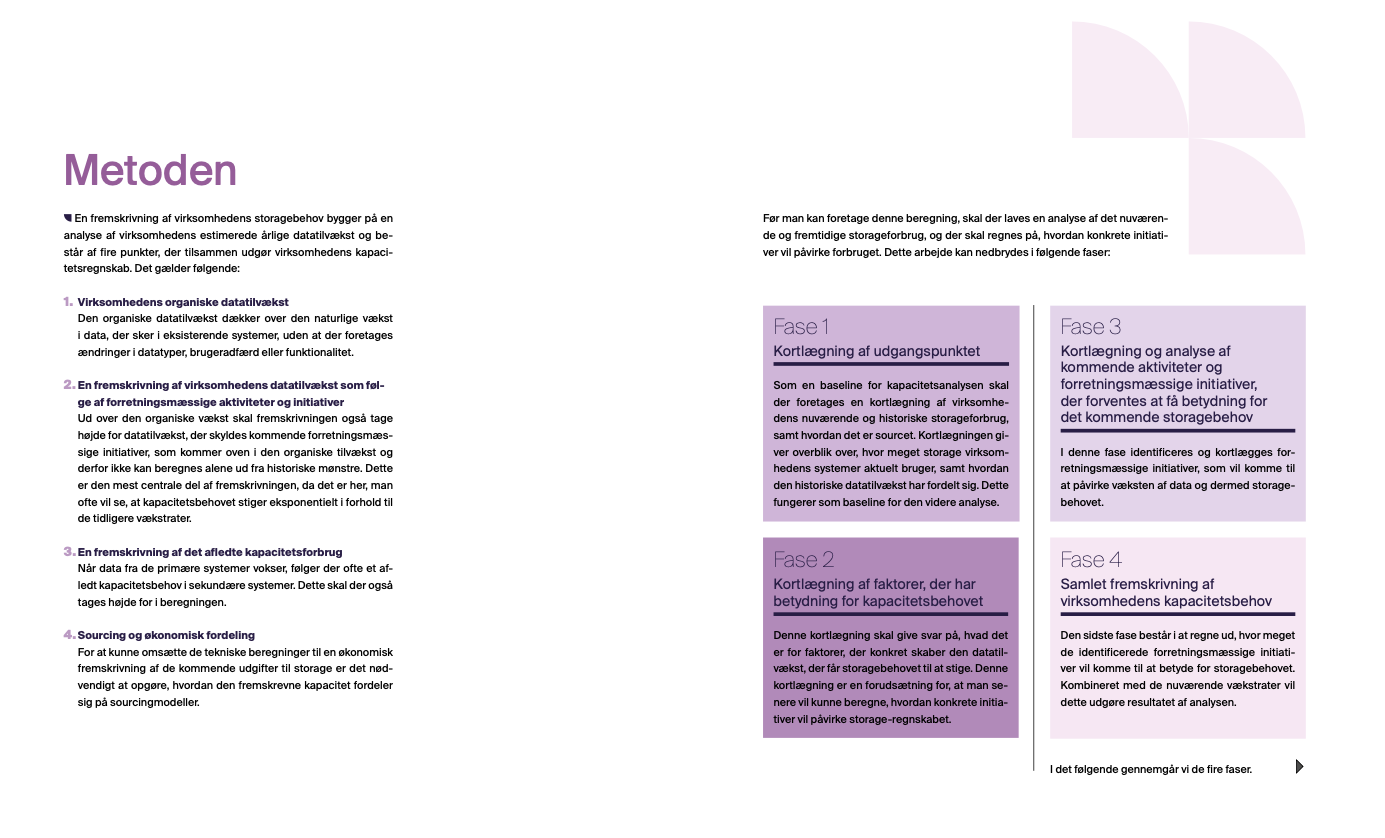
In this article, we present a method to analyze and project an organization’s total storage capacity needs 3–5 years into the future, broken down by systems, data types, and sourcing models. The method can be used as a foundation for IT budgeting, future infrastructure investments, and storage strategy decisions.
